
Most Farms Don’t Need More Advice. They Need Fewer Priorities.
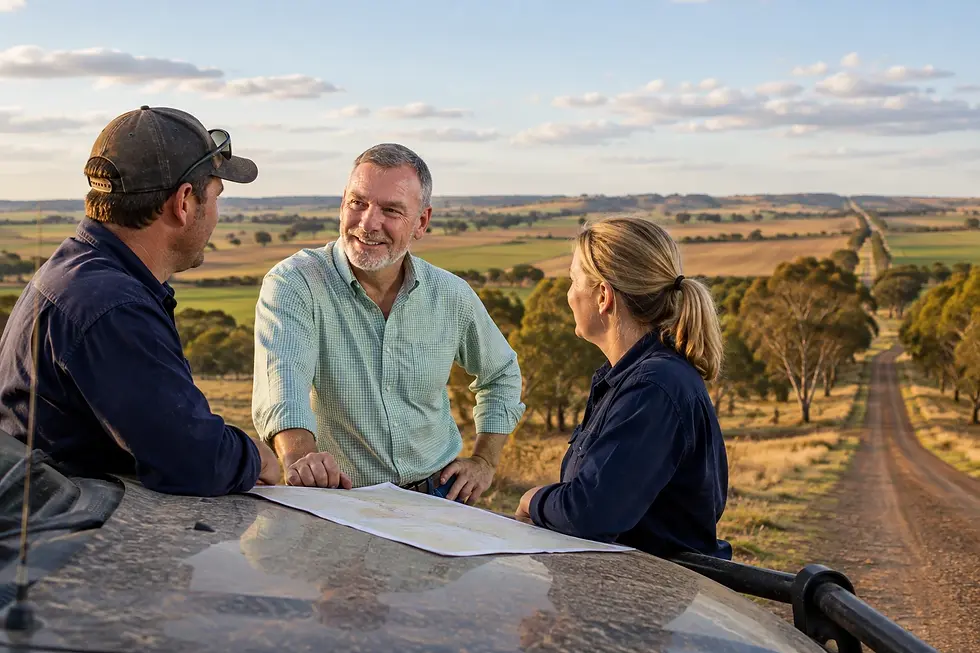
Since starting AF Consulting in 2021, one pattern has stood out to me: most farming families are not short of ideas.
They may want to improve production, reduce debt, replace machinery, lease more country, buy the neighbouring farm or prepare the business for the next generation. At the same time, the agronomist, accountant, bank manager and livestock adviser may each have sensible recommendations of their own.
The problem is rarely finding another worthwhile idea. It is deciding which one deserves attention first.
Good advice can still create confusion
Farmers have access to a great deal of specialist knowledge. Agronomists understand crops and soils. Livestock advisers see opportunities to improve production. Accountants focus on tax and compliance, while banks naturally consider debt and financial risk.
Most of that advice may be perfectly sound.
The difficulty is that every recommendation draws on the same pool of cash, labour and management time. A farm cannot increase fertiliser rates, replace major machinery, improve livestock infrastructure, reduce debt and prepare for a land purchase without those decisions competing with each other.
I have seen farming families trying to act on several reasonable recommendations at once. None of the decisions looked excessive in isolation, but together they placed pressure on cash flow and left the family feeling as though the business was always busy without making real progress.
Good advice can become poor management when too much of it is acted upon at the same time.
Several good decisions can still stretch the business
Farm businesses do not always come under pressure because of one obviously bad decision. More often, several defensible decisions are made close together.
A machinery upgrade improves reliability. More leased land creates additional production. New sheep yards save labour. Higher inputs may lift yield. Each decision has a reasonable business case.
But all of them make demands on the same farm.
The machinery commitment may reduce the cash available for working capital. The extra land may require more inputs before it produces income. The livestock investment may add labour at a time when the family is already stretched.
The question is not simply whether each decision is worthwhile.
It is whether the business has the financial and management capacity to carry them all.
A priority is what matters first
Nearly everything on a farm can feel important. That does not make everything a priority.
A priority is the issue that deserves attention before the others because it will make the greatest difference to the strength of the business.
For one farm, that may mean improving the Gross Margin from its main enterprise. For another, it could mean protecting cash, reducing debt or understanding why increasing turnover has not produced more available money.
Sometimes the right priority is not growth at all. It may be strengthening the existing business before committing to the next opportunity.
This is where clearer farm business analysis helps. The numbers should show where the business is performing well, where pressure is developing and which constraint is most likely to hold the farm back.
A priority is not everything that matters. It is what matters first.
Find the constraint before choosing the solution.
Before deciding what to do, it is worth asking what is currently limiting the business.
A farm may believe it needs more scale when the real problem is a weak operating margin. Another may focus heavily on reducing costs when lost production is having the greater financial effect.
A family may spend considerable time investigating a land purchase when the existing farm is not yet generating enough cash to support the additional debt. Another business may delay machinery replacement even though breakdowns and poor timeliness are already affecting production.
The visible problem is not always the real constraint.
That is why the answer should not begin with a preferred solution. It should begin with a clear understanding of the business as it stands today.
What is preventing the farm from moving forward? Is it profitability, cash flow, debt capacity, labour, management time or a lack of agreement about where the family wants to go?
Until that is understood, the farm may become very busy solving the wrong problem.
Every decision closes off another choice
One lesson from my earlier finance career that applies equally well to farming is that every dollar can only be committed once.
Cash used to replace machinery cannot also reduce debt. Borrowing capacity used to buy land may not be available to support the business after a poor season. Time spent establishing a new enterprise is time that cannot be spent improving the one already producing most of the farm’s income.
This does not mean the business should avoid investment. It means each major decision should be considered alongside the other choices it may remove.
A useful question is “What will choosing this prevent us from doing?”
That question often exposes the real trade-off. It also helps the family decide whether the opportunity is important enough to come before everything else.
Keep the active list short
A farm may have a long list of issues to address over several years. The active priority list should be much shorter.
Choose one or two matters that can be clearly understood, acted upon and measured. Agree on what the family is trying to improve, what action will be taken and what result would show that progress is being made.
“Improve profitability” is too broad to guide a decision.
“Lift the livestock Gross Margin by reviewing sale weights, sale timing and direct costs before the next turn-off” gives the business something practical to work on.
“Prepare for expansion” is also too vague.
“Determine the level of Operating Surplus and cash contribution required before taking on another land purchase” creates a financial test.
Clarity makes decisions easier. It also makes it easier to say no—or not yet—to an opportunity that does not support the current priority.
My Observation
Since starting AF Consulting, I have become convinced that most farming families already have a reasonable idea of where they would like to take the business.
What they often need is not another suggestion. It is a clearer view of the business, a better understanding of the choices in front of them and the confidence to decide what deserves attention first.
The strongest plans are not necessarily the longest. They are the ones that give the family a clear direction and enough discipline to avoid being pulled towards every new idea or opportunity.
Most farms do not need more advice.
They need fewer priorities—and a clear reason for choosing them.
AF Consulting helps family farms understand the business behind the farming, identify what matters most and make confident business decisions to build a stronger future.
To discuss the priorities shaping your farm business, call or email me, Robert at AF Consulting.


